
Inline 3D-CT Inspection in Battery Production

Short CT scan times can make small metallic inclusions difficult to distinguish from image noise,
reconstruction artefacts and surrounding cell structures. XNspect solution combines advanced
analytical image processing and AI to evaluate challenging 3D-CT data under production-relevant conditions.
Engineered for Your Exact Specifications
Unlike rigid, off-the-shelf software that rarely match unique factory requirements 100%, we deliver highly customized hardware-agnostic 3D-CT inspection solutions tailored to exactly fulfill your specific production demands, cycle times, and defect criteria.
Challenging Defect Cases
Detection depends on the material, defect location and surrounding cell structure. These examples illustrate
why identifying metallic inclusions requires more than a simple threshold on image intensity.
Engineered test cell samples used for analysis validation; not from serial production.
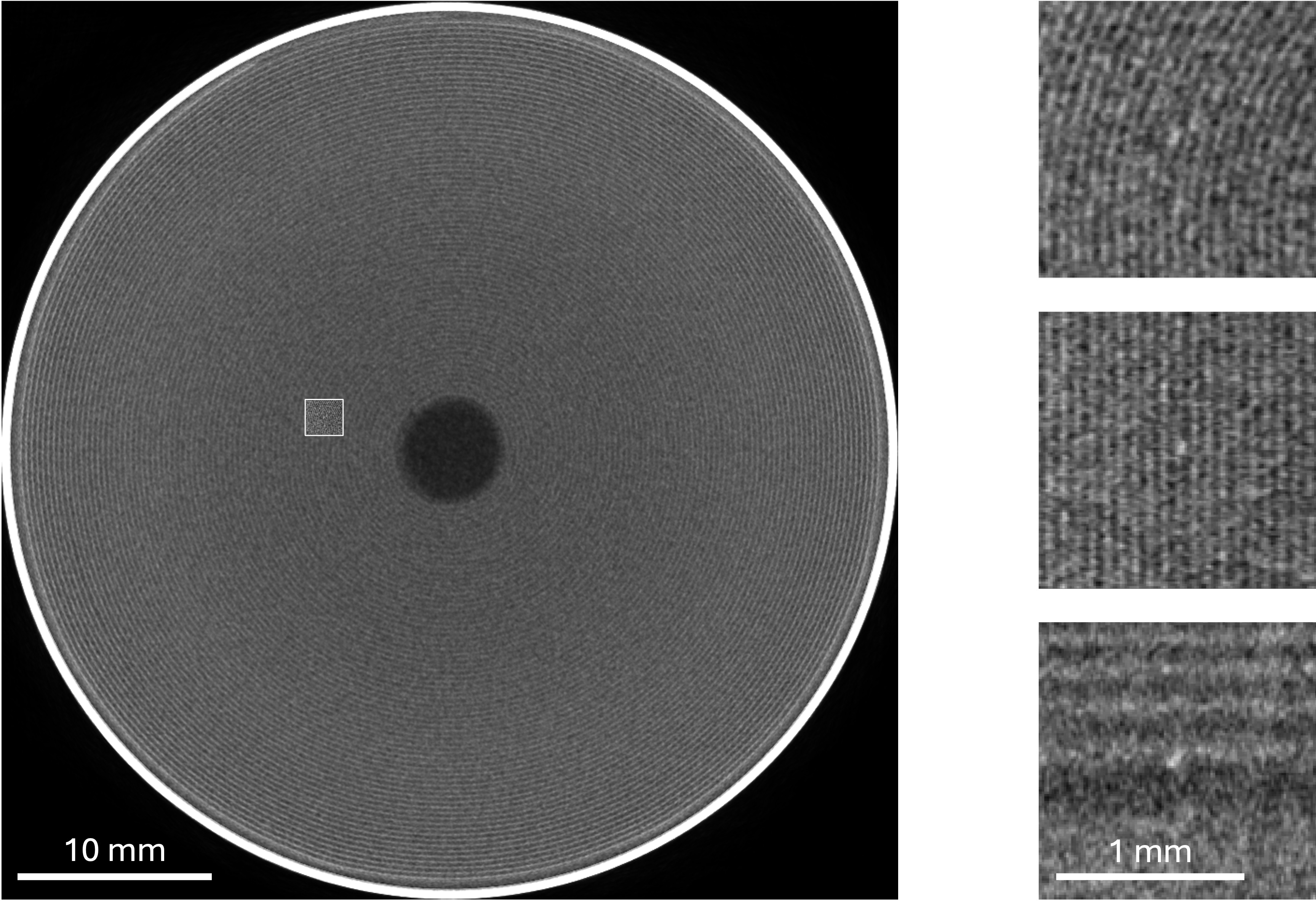
An inclusion only a few voxels across can be difficult to distinguish from background variation.
Detection sensitivity depends on scan and reconstruction conditions as well as the analysis method.
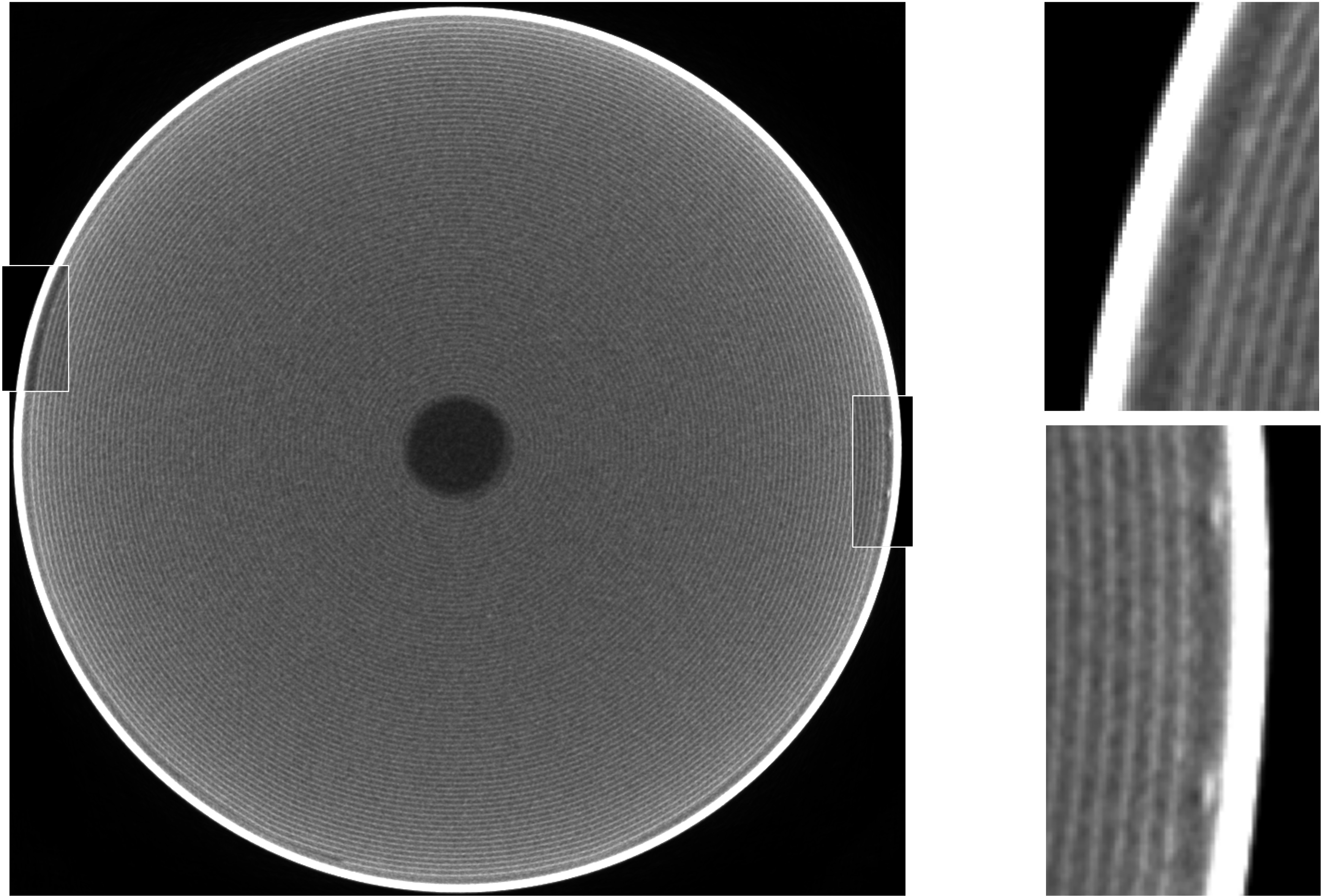
The housing region is dominated by imaging artefacts from the high-density steel casing.
Reliable inspection must separate a true inclusion from the surrounding artefact pattern.
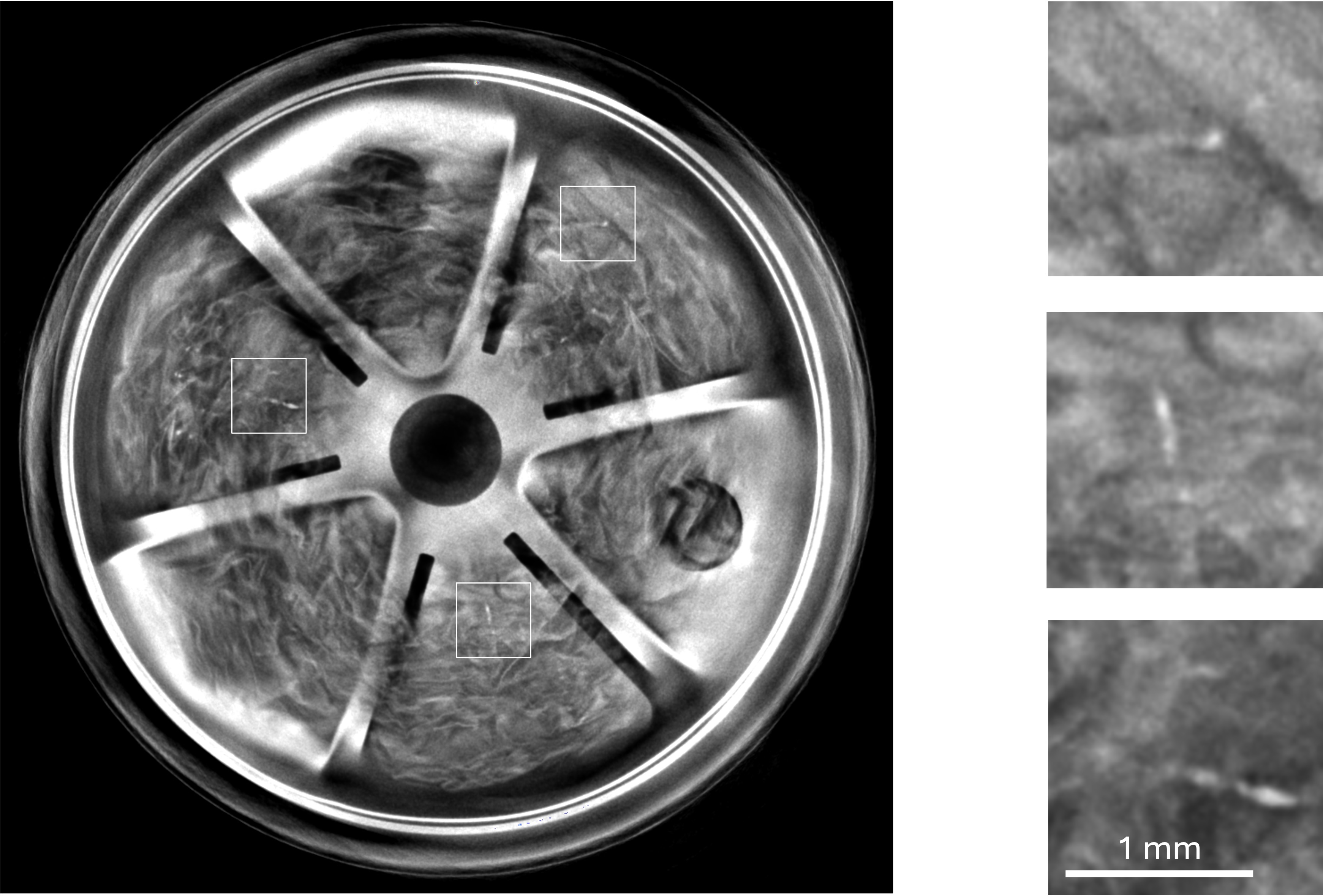
Real inclusions must be distinguished from process-related structures that can have a similar appearance in CT data.
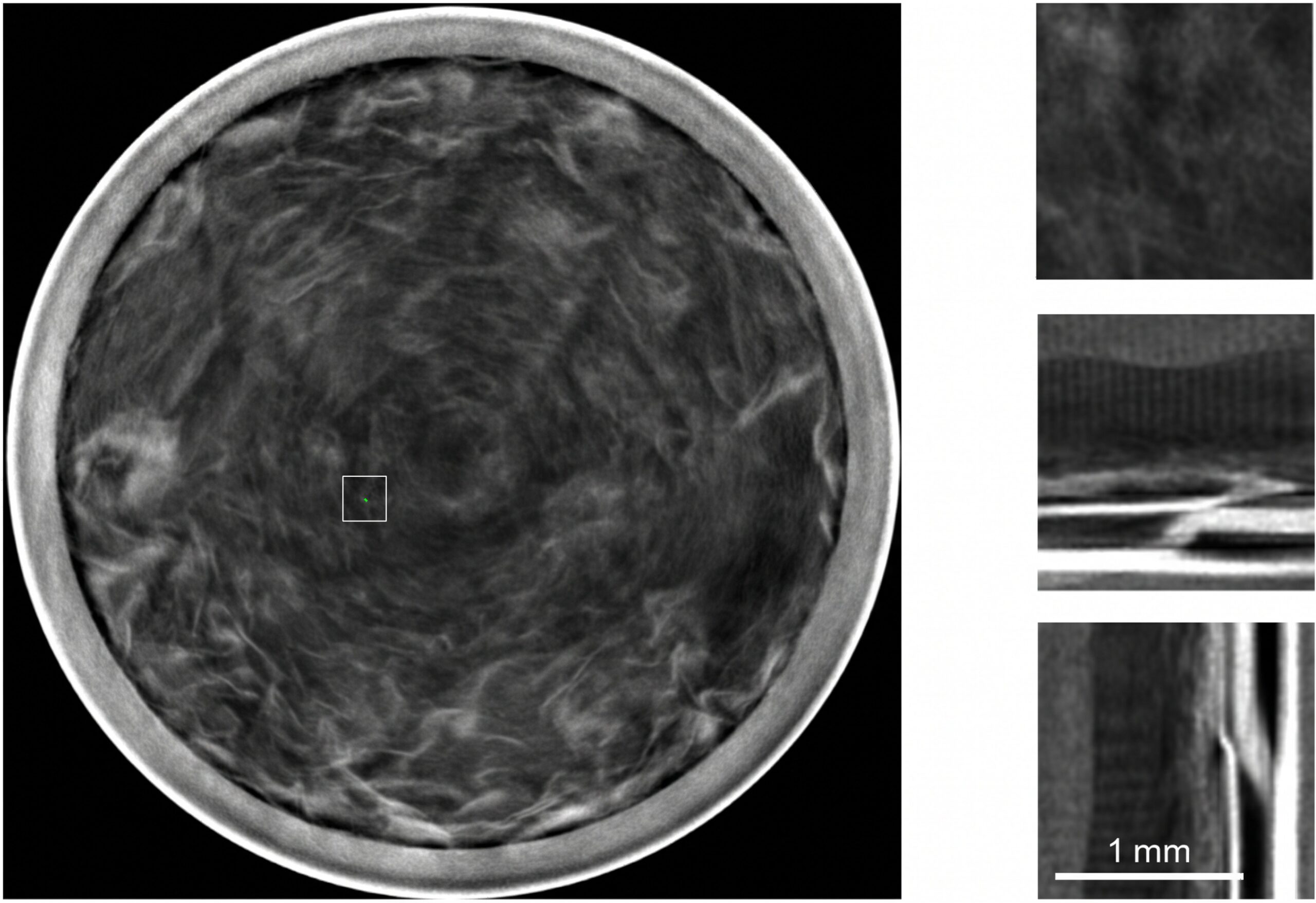
Folded or overlapping conductor structures can mask small indications.
Analysis must consider the local image context.
A Multi-Stage Approach
XNspect combines advanced detection methods to address different defect signatures
while accounting for the data and processing constraints of production inspection.
Analytical processing prepares and transforms CT data to support efficient analysis of relevant structures.
A 3D classification network evaluates candidate defect regions to help distinguish relevant indications
from other structures in the volume.
Anomaly detection identifies regions that differ from learned patterns of normal data, helping identify
indications that may not be represented in the training data.
Image Quality vs. Production Speed
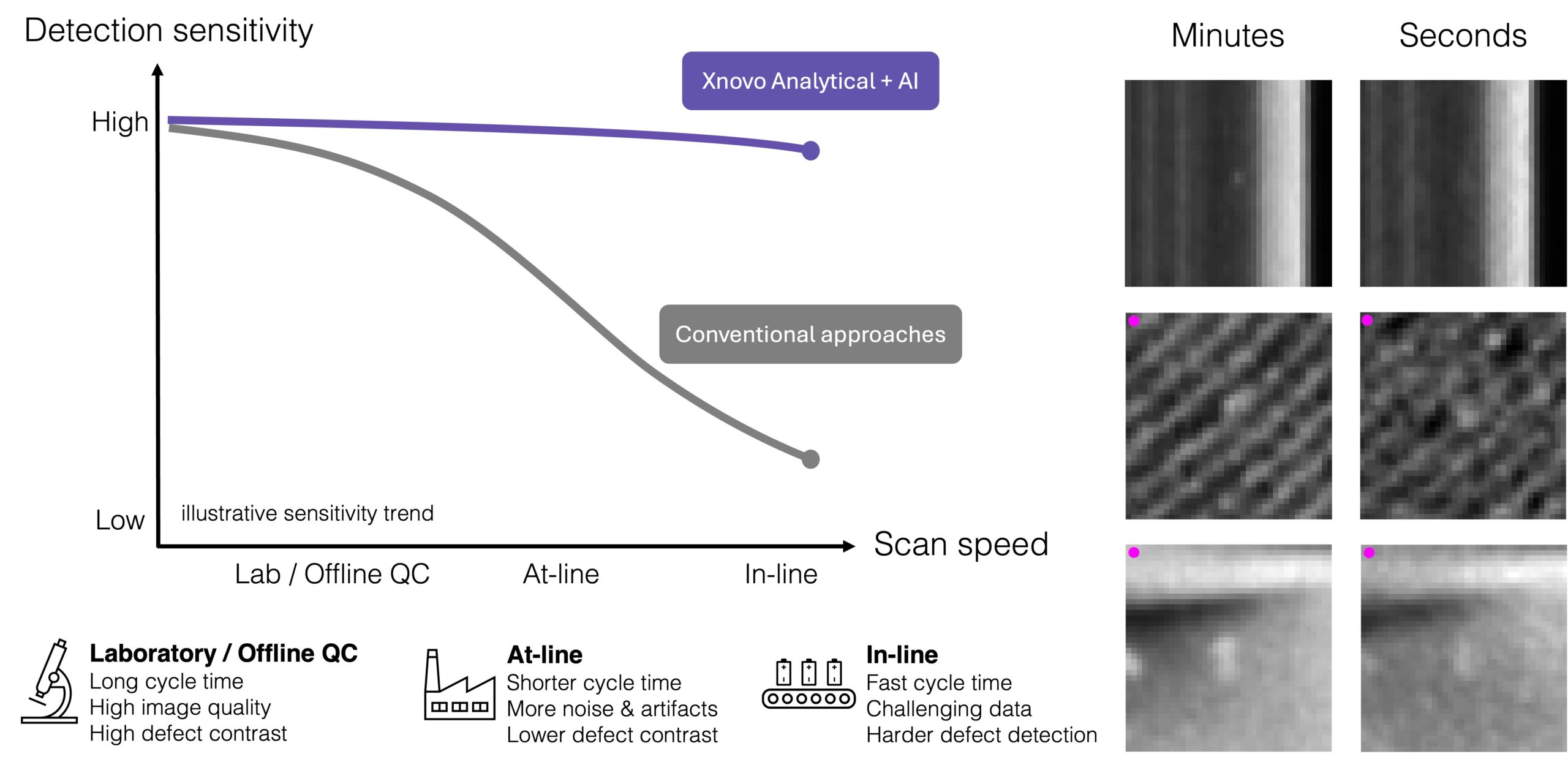
Shorter scan times support production throughput but can reduce defect contrast, making small inclusions
harder to distinguish from noise and surrounding structures. Xnovo combines analytical processing with AI
methods to extract useful defect information from challenging production scans.
Built for Production
Inspection performance depends on more than detection algorithms. The workflow must fit the available
CT data, target cycle time, manufacturing interfaces and traceability requirements.
Processing performance
Cycle time
Processing can be distributed across available CPU and GPU resources and focused on relevant regions.
Actual throughput should be evaluated on representative data and target hardware.
CT data compatibility
System fit
XNspect can be evaluated with volume data from the customer’s CT infrastructure. Supported formats
and configuration should be confirmed for each deployment.
Factory and quality interfaces
Integration
Inspection outputs can be connected to relevant production and quality workflows. Confirm interface
availability, including OPC UA, PLC and Q-DAS connectivity, for the proposed configuration.
Traceability and reporting
Quality records
Inspection results can be associated with CT data and production records according to the customer’s
traceability, reporting and alerting requirements.
Feasibility to Production
The project can progress in stages, with technical results and requirements reviewed before moving
to the next level of integration.
Evaluate representative CT data against agreed defect criteria, reviewing detection results,
false positives, missed indications and data suitability.
Connect the analysis to the intended CT workflow and evaluate throughput on target hardware
against the required cycle time.
Validate the end-to-end workflow in an agreed at-line or inline setup using production-relevant scans,
acceptance criteria and required manufacturing or quality interfaces.
Evaluate XNspect on Your CT Data
Discuss your target defect types, scan conditions and cycle-time requirements with our team.
Together, we can determine whether a feasibility assessment is the right next step.
